
600 ml to oz: Is a 600 mL Bottle the Same as 20 oz?
Convert 600 ml to oz: 20.29 US fluid ounces. Compare it with a 20 oz bottle, check imperial ounces, and find the right cup measurement for your recipe.
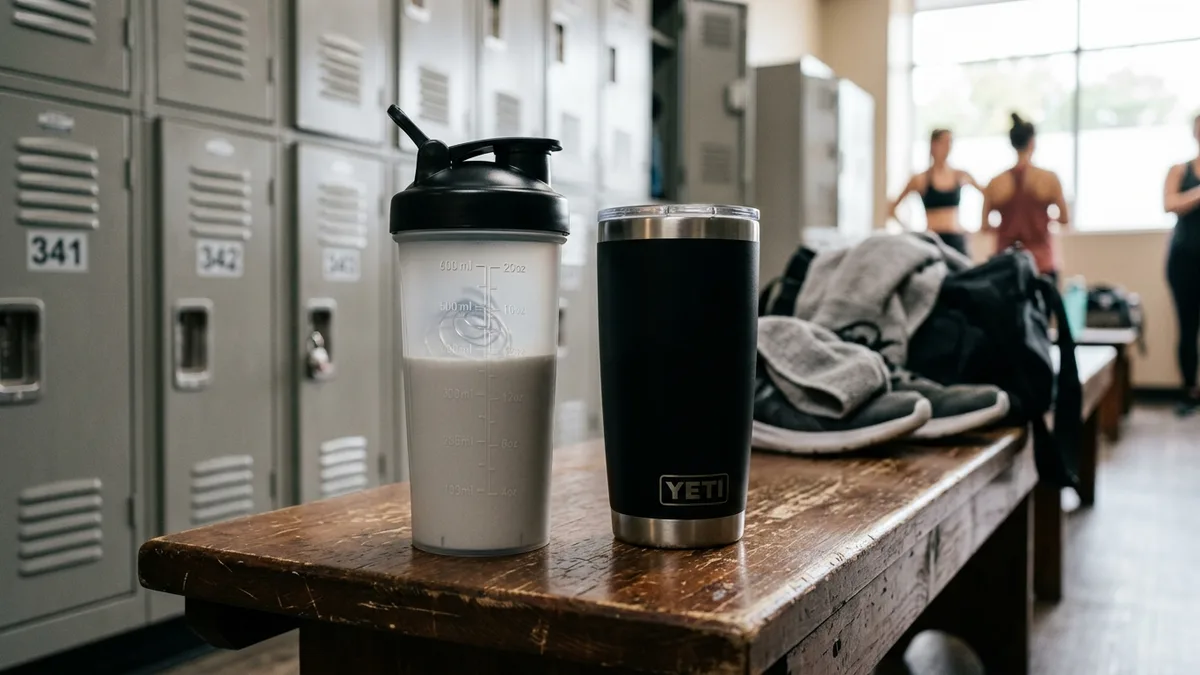
Table of Contents
19 sections600 ml to oz is approximately 20.29 US fluid ounces, or 20.3 fl oz rounded to one decimal place. That makes 600 mL slightly larger than an exact 20 US fl oz amount. In imperial measurements, it equals approximately 21.12 imperial fluid ounces.
The closeness to 20 ounces is what makes this size confusing. A bottle, shaker, or recipe may use a rounded ounce equivalent, while a calculator gives more decimal places. The small difference can matter when you are deciding whether one container will hold everything from another.
For a simple capacity comparison, think of 600 mL as a little over 20 US fluid ounces. For measuring ingredients, follow the stated milliliter amount when possible. The sections below explain the gap and show how to handle a recipe or container marked in different units.
The Useful Numbers to Remember
- 600 mL = approximately 20.29 US fl oz.
- 20 US fl oz = approximately 591.47 mL.
- The difference is approximately 8.53 mL.
So a precisely measured 600 mL quantity would exceed an exactly 20 US fl oz capacity. The amounts are close, but substituting one for the other changes the volume by about 1.4% of the 600 mL target.
Will 600 mL Fit in a 20 oz Container?
If a container’s usable capacity is exactly 20 US fl oz, it holds about 591.47 mL. You would have roughly 8.53 mL left over after transferring a full 600 mL into it.
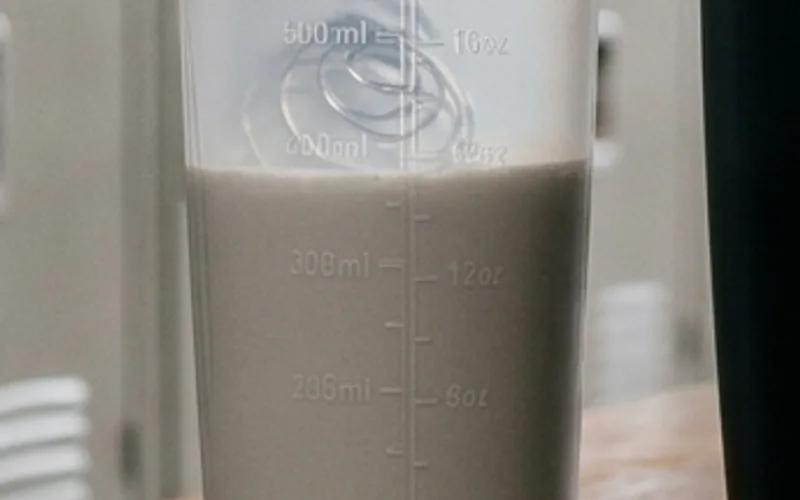
Actual product descriptions may use rounded size names. Check the manufacturer’s stated capacity and any maximum-fill marking, particularly on a shaker that needs room for its lid or mixing insert. The advertised size and the comfortable working fill level may describe different things.
Here is how 600 mL compares with several explicitly stated US capacities:
| Container capacity | Metric equivalent | Compared with 600 mL |
|---|---|---|
| 16 US fl oz | 473.18 mL | About 126.82 mL smaller |
| 20 US fl oz | 591.47 mL | About 8.53 mL smaller |
| 24 US fl oz | 709.76 mL | About 109.76 mL larger |
This is a capacity comparison. Adding ice or other ingredients uses some of the available space, so leave room for them when choosing a container.
How the 600 ml to oz Calculation Works
One US fluid ounce equals 29.5735295625 mL. To find how many fluid ounces fit into 600 mL, divide:

600 mL ÷ 29.5735295625 mL per US fl oz = 20.2884136… US fl oz
The usual rounded result is 20.29 US fl oz. A display showing 20.3 fl oz has rounded to one decimal place, while 20 fl oz is a whole-number approximation.
You can check the scale of the answer mentally by using 30 mL per fluid ounce. Dividing 600 by 30 gives 20. Since a US fluid ounce is actually a little smaller than 30 mL, the more precise result must be a little larger than 20.
Using Cups When a Recipe Calls for 600 mL
The answer in cups depends on the cup’s capacity. A US customary cup, a 240 mL measure, and a 250 mL measure produce different counts:
| Cup capacity | Number of cups in 600 mL |
|---|---|
| US customary cup, approximately 236.59 mL | About 2.536 cups |
| Cup marked 240 mL | Exactly 2.5 cups |
| Cup marked 250 mL | Exactly 2.4 cups |
For example, if your measuring cup holds 250 mL, two full cups give you 500 mL. Add another 100 mL to reach the recipe’s target. If the cup is explicitly marked 240 mL, two and a half cupfuls give 600 mL.
The 240 mL cup is also used for US nutrition-labeling household measures. It differs slightly from the US customary cup of approximately 236.59 mL. Read the capacity printed on your tool instead of assuming every item called a “cup” is identical.
Choosing the Correct Ounce Setting
A conversion tool should identify which ounce it uses. For a US recipe or a container explicitly marked in US fluid ounces, select US fl oz. If the source specifies imperial fluid ounces, use imperial fl oz.
The imperial calculation uses a smaller unit:
600 ÷ 28.4130625 ≈ 21.12 imperial fl oz
That result does not mean the container is larger. It describes the same 600 mL with a different unit size.
Also look for the word fluid. If a tool asks you to select water, milk, oil, or a density, it may be converting volume into weight ounces. That is a different question. A straightforward milliliter-to-fluid-ounce conversion does not need an ingredient selection.
A Recipe Example: Keep the Original Volume
Suppose a soup recipe calls for 600 mL of stock, but your jug has both mL and fl oz scales. Use the 600 mL line. It is the amount the recipe specifies and avoids estimating where 20.29 falls between ounce markings.
If you only have a US fluid-ounce measure, use approximately 20.3 fl oz, as closely as its graduations allow. Stopping at 20 fl oz gives about 8.53 mL less stock than the original instruction.
Whether that difference matters depends on the recipe. For a flexible dish you can adjust by taste or consistency, a small approximation may be useful. When reproducing a carefully measured formula, keep the original units and choose a measure with suitable markings.
Reading a Jug With 2 oz Graduations
Some measuring jugs mark 18, 20, and 22 US fluid ounces without showing every intermediate amount. The 600 mL target falls between the 20 and 22 marks, much closer to 20.
The gap above 20 is approximately 0.29 US fl oz. That is about 14.4% of the two-ounce interval from 20 to 22. On a suitable straight-sided measure, it is only a small movement above the lower line.
Treat that as a visual approximation, not a new calibrated mark. A coarse scale cannot establish 20.29 fl oz precisely. If the jug also has milliliter graduations, the 600 mL line is easier to use and avoids estimating a fraction of an ounce interval.
Make sure the mark you follow belongs to the correct scale. Some jugs put metric and fluid-ounce markings on different sides or use multiple colored scales. Looking through a transparent vessel can make a far-side line appear close to the near-side line you intended to read.
Building 600 mL From Smaller Measures
If your largest metric measure stops below 600 mL, combine smaller measured quantities. 400 mL plus 200 mL, 300 mL twice, or 150 mL four times each totals 600 mL.
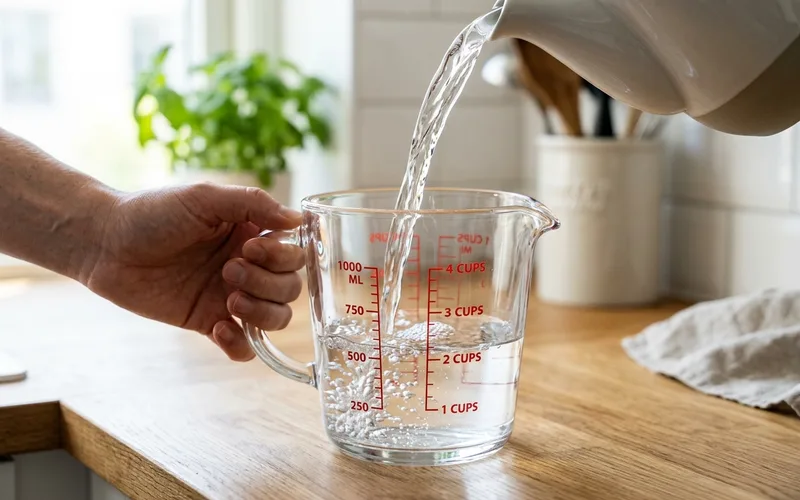
Choose the combination your actual tool can show clearly. A 250 mL cup used twice still needs a separately measured 100 mL addition. Calling the remainder “a little less than half a cup” is a rough estimate, while a readable 100 mL line gives you a definite target.
Every transfer introduces another opportunity for a spill or a counting mistake. For a clear, freely pouring liquid, two larger measured additions may be simpler than many small ones. For a thick liquid, allow the measure to drain consistently so one addition is not noticeably short of another.
If you are recording a recipe, write the total as 600 mL even when you used several pours to reach it. The measuring workaround does not change the recipe’s intended quantity.
Scaling a Recipe That Starts With 600 mL
For half a batch, use 300 mL, approximately 10.14 US fl oz. For one and a half batches, use 900 mL, approximately 30.43 US fl oz. For a double batch, use 1,200 mL, approximately 40.58 US fl oz.
Multiply the original 600 mL amount by the batch factor, then convert if necessary. This preserves the recipe’s stated volume and gives you one final rounding step.
For example, treating 600 mL as exactly 20 US fl oz and doubling would produce 40 fl oz, approximately 1,182.94 mL. That is about 17.06 mL below the intended 1,200 mL total. The small original approximation has doubled along with the recipe.
Whether the difference affects the result depends on the dish, but the arithmetic explains why a scaled conversion can drift from the metric instruction. Keep other ingredient ratios consistent when scaling; converting this one liquid correctly does not automatically scale the rest of the recipe.
A 600 mL Capacity Does Not Always Mean 600 mL of Liquid
A shaker may be described by its nominal capacity while also showing a lower working fill line. If the manufacturer’s instructions specify a maximum fill, use that instruction for the task. The conversion cannot tell you how much room a lid assembly or mixing action needs.
Adding a solid ingredient also changes what occupies the container. Starting with 600 mL of liquid and then adding powder does not establish a final mixture volume of exactly 600 mL. The resulting volume depends on how the ingredients combine.
Similarly, a bottle partly filled with ice has less space available for a fresh liquid pour than the same empty bottle. Do not subtract a guessed “ice volume” based only on appearance. Measure the liquid separately if its amount matters to the recipe.
The practical distinction is between container capacity, liquid added, and final contents. A product specification usually addresses the first, while a recipe may be asking for the second. Keeping those separate prevents an apparently correct fill level from producing the wrong ingredient amount.
Checking an Unexpected Calculator Result
A result near 20.29 suggests US fluid ounces, while a result near 21.12 suggests imperial fluid ounces. If the result is in the hundreds, check whether you accidentally selected grams or another output unit.
Also confirm that you entered 600 rather than 0.6 when the input field expects milliliters. Those numbers describe the same quantity only when 0.6 is labeled liters. An input-unit mismatch creates a much larger error than rounding the final ounce value.
Frequently Asked Questions
Is 600 mL exactly 20 ounces?
No. It is approximately 20.29 US fluid ounces. Exactly 20 US fl oz is about 591.47 mL, which is 8.53 mL short of 600 mL. A “20 oz” description may be rounded, so check the actual metric capacity if you need the two sizes to match.
Why is a 600 mL shaker sometimes described as 20 oz?
The description may use a rounded US fluid-ounce equivalent. Since 600 mL is 20.29 US fl oz, rounding to a whole ounce gives 20. Check the product’s detailed capacity and fill markings rather than treating a short product name as an exact conversion.
How much more is 600 mL than 16 fl oz?
Sixteen US fluid ounces equal approximately 473.18 mL. Subtracting that from 600 mL leaves 126.82 mL, or approximately 4.29 US fl oz. This comparison uses US fluid ounces for both amounts; imperial units would give a different result.
How many liters is 600 mL?
It is exactly 0.6 liters. Divide milliliters by 1,000 to express them in liters: 600 ÷ 1,000 = 0.6. This metric conversion needs no rounding and is useful when a container lists liters but a recipe specifies milliliters.
Is 600 mL two and a half cups?
It is exactly two and a half 240 mL cups. With US customary cups, 600 mL is approximately 2.536 cups. With 250 mL cups, it is 2.4 cups. Check the cup’s marked capacity before using the fraction in a recipe.
Can I enter 20.29 oz on a kitchen scale to measure 600 mL?
No. A scale’s ordinary ounce setting measures mass, while 20.29 US fl oz describes volume. To weigh out a liquid volume, you need the appropriate mass based on its density. A jug with a 600 mL marking gives you the volume directly.
The Best Number for Your Task
Use 20.29 US fl oz as the standard 600 ml to oz conversion. When comparing containers, remember that an exact 20 US fl oz capacity is slightly smaller. When cooking from a metric recipe, measuring to the 600 mL mark is the simplest way to preserve the stated amount.
Oz to mL Editorial Team
Verified EditorialWritten and verified by our culinary and scientific measurement specialists. All formulas, charts, and conversions strictly reference NIST standard US Customary and Metric SI units.
Convert Fluid Ounces & Milliliters Instantly
Need quick calculations for cooking, hydration tracking, or chemistry? Our free converter updates in real time with high decimal accuracy.
Related Conversion Guides
 Bottle Conversions
24 oz to ml: Accurate Conversion, Formula & Bottle Size
Convert 24 oz to ml with the correct US or UK measurement. See the formula, a handy conversion chart, and what a 24-ounce bottle holds in milliliters and liters.
 Bottle Conversions
750 ml to oz: US Fluid Ounces, UK Ounces & Bottle Size
Convert 750 ml to oz accurately: 25.36 US fluid ounces or 26.40 UK imperial fluid ounces. See the formula, rounding, cups, and bottle portions.
 Reference Charts
Unit Conversion Chart for Everyday Measurements and Math
Use this unit conversion chart for length, weight, volume, area, speed, and temperature, with metric and US measurements, clear formulas, and worked examples.