
Unit Conversion Chart for Everyday Measurements and Math
Use this unit conversion chart for length, weight, volume, area, speed, and temperature, with metric and US measurements, clear formulas, and worked examples.

Table of Contents
19 sectionsA unit conversion chart shows how measurements expressed in different units compare. For example, 1 inch equals 2.54 centimeters, while 1 kilogram equals 1,000 grams. Find the measurement type below, choose your starting and ending units, and apply the listed conversion factor.
These tables cover everyday length, weight, liquid volume, area, speed, and temperature conversions. They also separate US customary liquid measures from imperial measures, where identical unit names can represent different amounts.
How to read the charts: An equals sign (=) marks an exact relationship. The approximately equal sign (≈) marks a rounded value. In tables labeled “multiply by,” multiply your starting number by the factor shown. To work backward, divide by that same factor. Temperature needs a separate formula because its scales have different zero points.
Metric Conversion Chart
Metric prefixes indicate powers of ten. Kilo means 1,000, centi means one hundredth, and milli means one thousandth. These prefixes make conversions within a measurement type straightforward. }
| Measurement | Exact equivalent |
|---|---|
| 1 kilometer (km) | 1,000 meters (m) |
| 1 meter (m) | 100 centimeters (cm) |
| 1 centimeter (cm) | 10 millimeters (mm) |
| 1 kilogram (kg) | 1,000 grams (g) |
| 1 gram (g) | 1,000 milligrams (mg) |
| 1 liter (L) | 1,000 milliliters (mL) |
For example, a cable measuring 2.4 m is 240 cm long:
2.4 × 100 = 240 cm
When converting to a smaller unit, the numerical value increases because more of those units fit into the same measurement. Converting to a larger unit makes the number smaller.
Length and Distance Conversions
Use this length conversion chart for dimensions, walking distances, fabric measurements, and similar tasks.
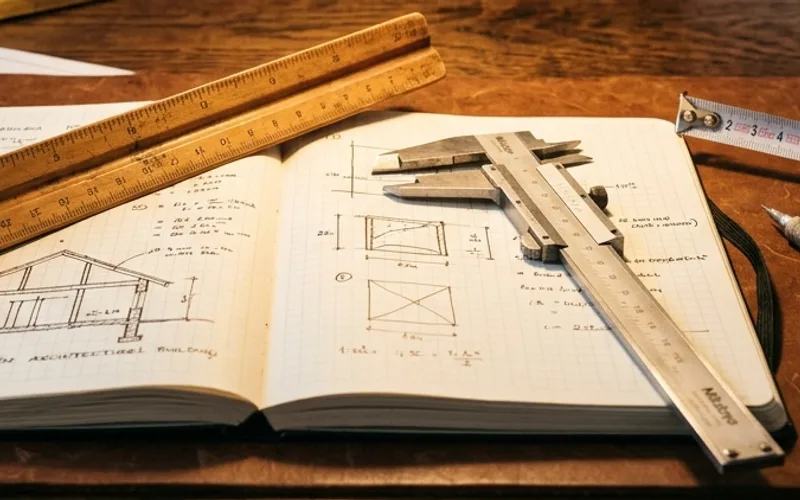
| Convert from | Convert to | Multiply by | Precision |
|---|---|---|---|
| Inches | Centimeters | 2.54 | Exact |
| Feet | Meters | 0.3048 | Exact |
| Yards | Meters | 0.9144 | Exact |
| Miles | Kilometers | 1.609344 | Exact |
These values use the international inch, foot, yard, and mile. }
Within the customary system, 12 inches = 1 foot, 3 feet = 1 yard, and 5,280 feet = 1 mile.
Suppose a shelf is 36 inches wide. Multiply 36 by 2.54 to get 91.44 cm. To check whether a 90 cm space is wide enough, compare those two measurements directly. Rounding the shelf width down to 90 cm would hide a meaningful difference.
Weight and Mass Conversion Chart
Everyday searches often call these “weight conversions.” Technically, grams, kilograms, ounces, and pounds in this table are units of mass.

| Measurement | Equivalent |
|---|---|
| 1 standard ounce (oz) | ≈ 28.35 g |
| 1 pound (lb) | = 0.45359237 kg |
| 1 kilogram (kg) | ≈ 2.20462 lb |
| 1 pound (lb) | = 16 oz |
| 1 US short ton | = 2,000 lb |
| 1 metric tonne (t) | = 1,000 kg |
The ounce here is the standard avoirdupois ounce. Precious metals may use the different troy ounce. }
For a parcel weighing 3.2 kg, the rounded conversion is:
3.2 × 2.20462 ≈ 7.05 lb
Read “ton” carefully on shipping or material specifications. A US short ton and a metric tonne are different quantities, even though their names sound similar.
Liquid Volume: US and Imperial Measurements
A volume conversion chart needs a system label. Use the US column for US customary recipes and liquid measures. Use the imperial column when the original measurement explicitly uses that system.
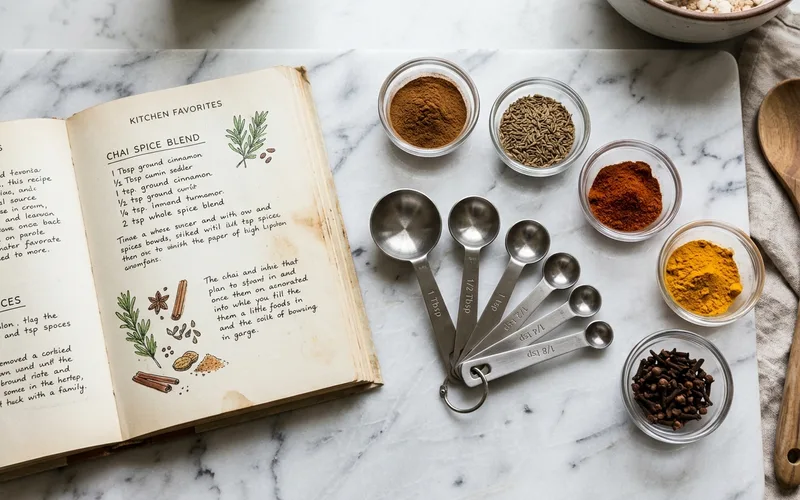
| Unit | US liquid measure | Imperial measure |
|---|---|---|
| 1 fluid ounce | ≈ 29.57 mL | ≈ 28.41 mL |
| 1 pint | ≈ 473.18 mL | ≈ 568.26 mL |
| 1 quart | ≈ 946.35 mL | ≈ 1,136.52 mL |
| 1 gallon | ≈ 3.78541 L | ≈ 4.54609 L |
These are liquid measures; US dry pints and dry quarts have separate definitions. }
For a quick US kitchen reference:
| US customary measure | Approximate milliliters |
|---|---|
| 1 teaspoon | 4.93 mL |
| 1 tablespoon | 14.79 mL |
| 1 cup | 236.59 mL |
The cup value follows from 8 US fluid ounces. Rounded kitchen measures can use different values, so follow the measuring system stated in the recipe. }
Fluid ounces measure volume. Ounces without “fluid” usually refer to mass. A volume chart cannot tell you how many grams an ingredient weighs unless its density is also known.
Area and Cubic Volume: Watch the Exponent
Converting square or cubic units requires more than applying a length factor once.
If 1 m = 100 cm, then:
- 1 m² = 100 × 100 = 10,000 cm²
- 1 m³ = 100 × 100 × 100 = 1,000,000 cm³
A square has two dimensions; a cube has three. Each dimension contributes its own conversion factor.
| Measurement | Equivalent |
|---|---|
| 1 square meter (m²) | = 10,000 cm² |
| 1 hectare (ha) | = 10,000 m² |
| 1 square foot (ft²) | ≈ 0.0929 m² |
| 1 cubic centimeter (cm³) | = 1 mL |
| 1 cubic meter (m³) | = 1,000 L |
The cubic centimeter and milliliter represent the same volume, making it possible to convert container dimensions into capacity. }
For example, a rectangular container with internal dimensions of 20 cm × 10 cm × 5 cm has a geometric volume of 1,000 cm³, or 1 L. That calculation assumes straight sides and filling to the full measured height.
Temperature Conversion Formulas
Temperature conversions involve an offset as well as a scale factor. Use these formulas for temperature readings:
| Conversion | Formula |
|---|---|
| Celsius to Fahrenheit | °F = (°C × 9/5) + 32 |
| Fahrenheit to Celsius | °C = (°F − 32) × 5/9 |
| Celsius to kelvin | K = °C + 273.15 |
| Kelvin to Celsius | °C = K − 273.15 |
Here, °C, °F, and K stand for the numerical readings on each scale. Kelvin uses the symbol K, without a degree sign. }
| Celsius | Fahrenheit | Kelvin |
|---|---|---|
| 0 °C | 32 °F | 273.15 K |
| 20 °C | 68 °F | 293.15 K |
| 25 °C | 77 °F | 298.15 K |
| 100 °C | 212 °F | 373.15 K |
For instance, 77 °F becomes (77 − 32) × 5/9 = 25 °C. Subtract 32 before multiplying.
Time and Speed Reference
Time conversions use several factors, so a decimal shift alone will not work.
| Measurement | Exact equivalent |
|---|---|
| 1 minute | 60 seconds |
| 1 hour | 60 minutes |
| 1 hour | 3,600 seconds |
| 1 week | 7 days |
| 1 mile per hour (mph) | 1.609344 kilometers per hour (km/h) |
| 1 meter per second (m/s) | 3.6 km/h |
The speed factors follow from converting both distance and time. For example, 10 m/s × 3.6 = 36 km/h.
Be careful with decimal hours: 1.5 hours is 1 hour 30 minutes, because 0.5 × 60 = 30. It does not mean 1 hour 50 minutes.
How to Use a Conversion Factor Without Guessing
For ordinary conversions within one measurement type:
Converted value = starting value × conversion factor
Write the units into your calculation so the unwanted unit cancels. For 250 centimeters to inches:
250 cm × (1 inch / 2.54 cm) ≈ 98.43 inches
The centimeters cancel, leaving inches. This method is called dimensional analysis, and it helps you choose whether to multiply or divide.
Before accepting an answer, check three things:
- Measurement type: Length must convert to length, area to area, and so on.
- System: Confirm US or imperial where the unit name is ambiguous.
- Rounding: Keep extra digits during the calculation and round the final result to suit the original measurement.
A calculator can provide many decimal places, but those digits do not make a rough measurement more accurate.
Converting Measurements That Use Two Units Together
Compound units describe one measurement relative to another, such as kilometers per hour or grams per milliliter. Check both parts of the unit rather than converting only the first one.
For example, 72 km/h becomes 20 m/s. Multiply by 1,000 to change kilometers to meters, then divide by 3,600 to change the hourly rate into a per-second rate:
72 × 1,000 ÷ 3,600 = 20 m/s
The numbers become easier to follow when you write the conversion in two stages: 72 kilometers per hour is 72,000 meters per hour, and 72,000 meters spread across 3,600 seconds is 20 meters each second.
Density works similarly. 1 g/mL equals 1,000 kg/m³, because both the mass unit and the volume unit change. Converting only grams to kilograms would leave the denominator in milliliters and would not answer the cubic-meter question.
Four Checks for Spreadsheet Conversions
If you reuse these factors in a spreadsheet, keep the original value, input unit, output unit, and conversion factor in separate labeled columns. This makes a formula easier to check and reduces the chance of applying one row’s factor to an unrelated measurement.
First, confirm the direction. A centimeters-to-inches calculation divides by 2.54; an inches-to-centimeters calculation multiplies by it. A correct factor used in the wrong direction still produces an incorrect answer.
Second, keep temperature formulas separate from simple multiplication formulas. A cell containing a Fahrenheit reading needs the subtraction step before the scale factor is applied.
Third, avoid rounding each intermediate cell unless the task requires it. You can display fewer decimal places while preserving additional digits for subsequent arithmetic. The final report should still reflect the precision of the original measurement.
Finally, check one row manually before filling the formula down a long column. Use a familiar relationship, such as 10 inches equaling 25.4 cm, to confirm the formula and unit labels agree.
Distinguish an Exact Definition From an Exact Measurement
An exact conversion factor does not remove uncertainty from the number you measured. If a board is measured as approximately one meter long, converting that estimate into centimeters does not make its actual length known perfectly.
Suppose a length reading is 50 cm with an uncertainty of about 1 cm. Dividing both figures by 2.54 gives roughly 19.69 inches with an uncertainty of 0.39 inch. Reporting 19.685039 inches without context would suggest more precision than the starting measurement supports.
For everyday work, a rounded result such as about 19.7 inches communicates the estimate more honestly. Keep exact factors in the calculation, but let the quality of the original measurement guide how you present the answer.
Frequently Asked Questions
What is a conversion factor?
A conversion factor is a ratio connecting equal quantities expressed in different units. For example, 100 cm and 1 m describe the same length. Multiplying by 100 cm per meter changes the unit and numerical value while preserving the actual length.
Can I use the same chart in both directions?
Yes, for a table that lists multiplication factors. Multiply when moving from the first unit to the second, and divide by the listed factor to reverse the conversion. For temperature, use the formula for your specific direction instead of simply dividing.
Is every metric conversion a matter of moving the decimal point?
Conversions between prefixed units of the same quantity use powers of ten. However, you must account for exponents in square and cubic units. Celsius to kelvin also needs an addition or subtraction, even though both are used with the metric system.
Why do two conversion charts give slightly different answers?
Often, they round to different numbers of decimal places. Another possibility is that they use different unit definitions, such as US and imperial pints. Check the system label and the precision before assuming that either chart contains a calculation error.
Can this chart convert milliliters to grams?
There is no universal factor for that conversion. Milliliters measure volume, while grams measure mass. You need the substance’s density, expressed in compatible units. With density in grams per milliliter, multiply the volume in milliliters by that density to calculate grams.
When should I use a converter instead of a chart?
Use a chart for a quick reference or a calculation with a familiar factor. A converter is useful for repeated calculations, unusual values, or extra decimal places. Always select the correct measurement category and unit system before entering your number.
Keep the Unit Beside the Number
The most useful habit is simple: write down the unit at every step. This unit conversion chart gives you the relationships; matching the measurement type, checking the system, and rounding at the end will help you apply them correctly.
Oz to mL Editorial Team
Verified EditorialWritten and verified by our culinary and scientific measurement specialists. All formulas, charts, and conversions strictly reference NIST standard US Customary and Metric SI units.
Convert Fluid Ounces & Milliliters Instantly
Need quick calculations for cooking, hydration tracking, or chemistry? Our free converter updates in real time with high decimal accuracy.
Related Conversion Guides
 Bottle Conversions
600 ml to oz: Is a 600 mL Bottle the Same as 20 oz?
Convert 600 ml to oz: 20.29 US fluid ounces. Compare it with a 20 oz bottle, check imperial ounces, and find the right cup measurement for your recipe.
 Bottle Conversions
750 ml to oz: US Fluid Ounces, UK Ounces & Bottle Size
Convert 750 ml to oz accurately: 25.36 US fluid ounces or 26.40 UK imperial fluid ounces. See the formula, rounding, cups, and bottle portions.
 Volume to Weight
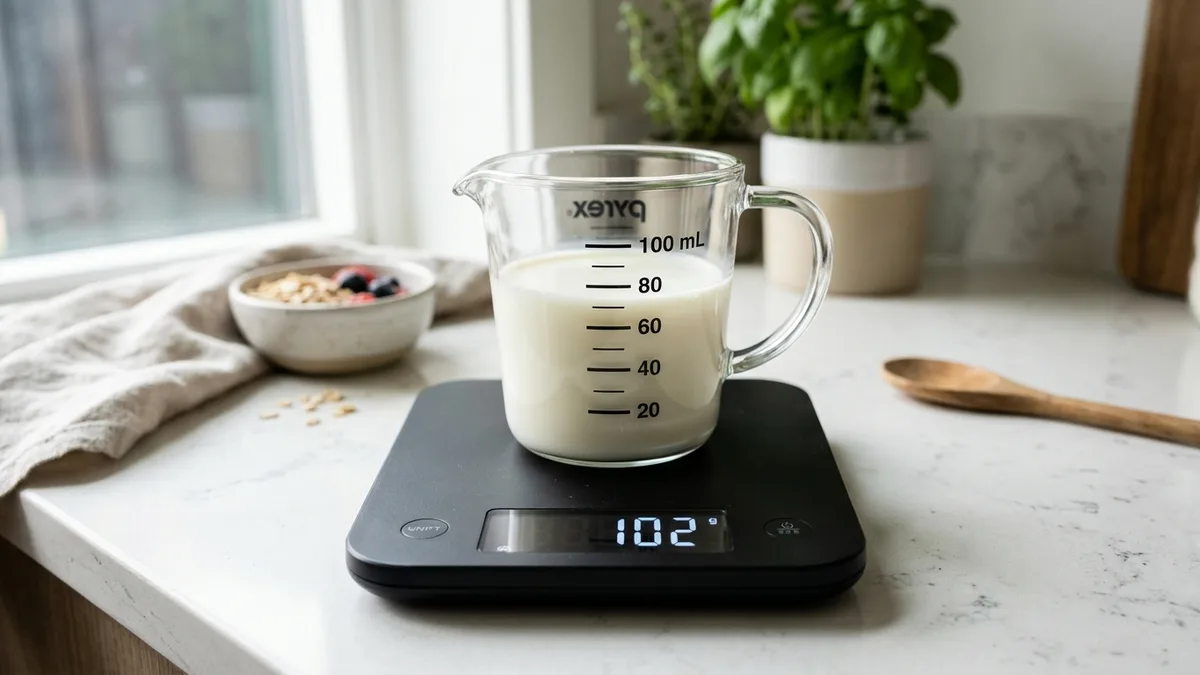
How Many Grams Is 100 ml? Water & Ingredient Chart
How many grams is 100 ml? Water is about 100 g, but other ingredients differ. See a clear 100 mL to grams chart and the density formula.