
How Much Is 1 Ounce Liquid? mL, Cups & Pour Sizes
How much is 1 ounce liquid? See its volume in mL, tablespoons, and cups, how it compares with common pours, and what to check on labels.
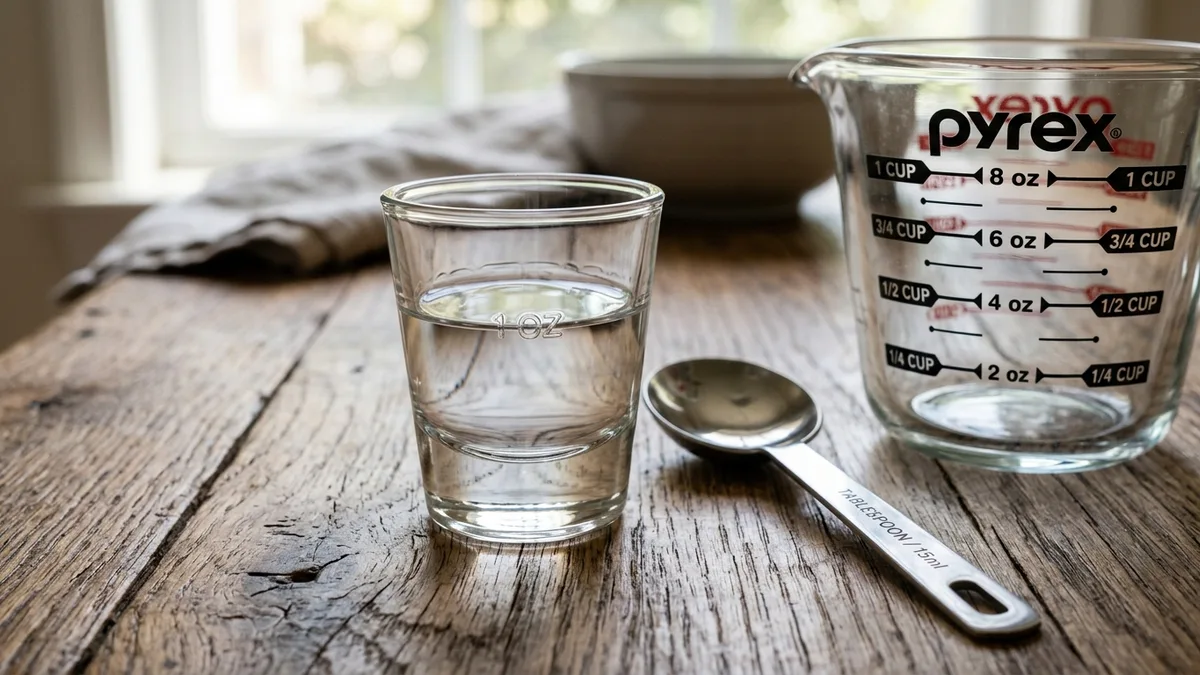
Table of Contents
18 sectionsHow much is 1 ounce liquid? In a US recipe, it usually means 1 US fluid ounce (fl oz), equal to approximately 29.57 milliliters (mL). Picture two measuring tablespoons or one-eighth of a US cup. If you only need a rough kitchen amount, 30 mL is close.
The number can be harder to picture than to calculate. A fluid ounce looks different in a narrow glass than it does in a broad bowl, and the amount poured into a drink may be larger than an ounce. A label might also say “oz” to describe weight, which calls for a different kind of measurement.
This guide puts one liquid ounce in context: how it compares with familiar measures, how to read the number on a package, and when a rounded 30 mL is useful.
How Big Is One Liquid Ounce?
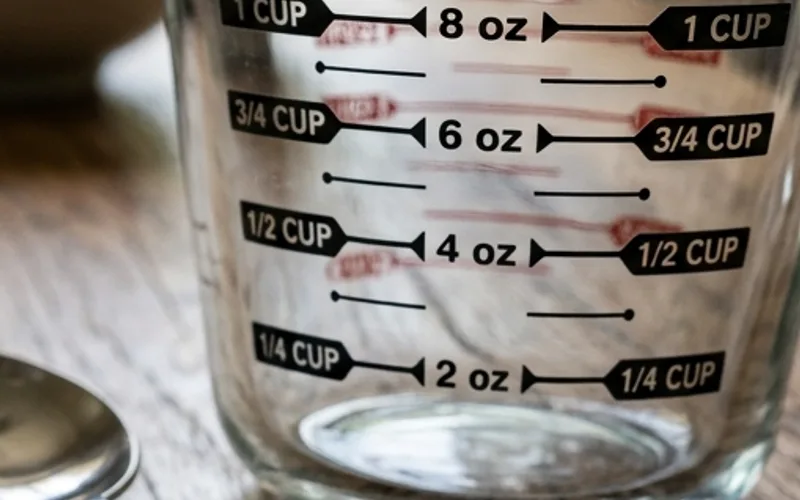
A US fluid ounce is one-eighth of a US customary cup. You would need eight one-ounce portions to fill that cup. One portion is also one-quarter of a four-ounce liquid measure.
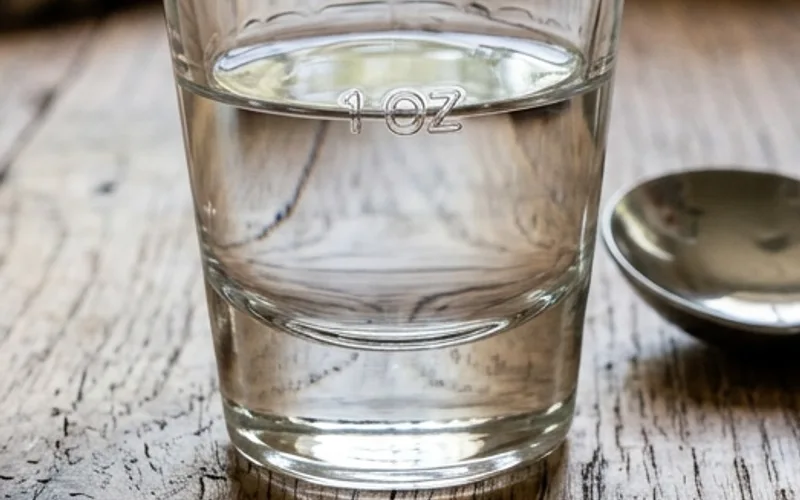
These comparisons make it easier to visualize the amount without relying on the apparent size of a glass. A wide container spreads the same volume over a larger area, making the liquid level look lower. The volume has not changed.
| If you have this much | One US fl oz is… |
|---|---|
| A US customary cup (8 fl oz) | 1/8 of it |
| A 4 fl oz measure | 1/4 of it |
| An 8 fl oz drink | 1/8 of it |
| A 12 fl oz drink | 1/12 of it |
All entries use US fluid ounces, so the fractions compare volume with volume. The drink examples describe size only; they do not suggest a particular serving amount.
How Much Is 1 Ounce Liquid in mL, Spoons, and Cups?
Use whichever unit your measuring tool shows:
| Unit | One US fluid ounce |
|---|---|
| Milliliters | Approximately 29.57 mL |
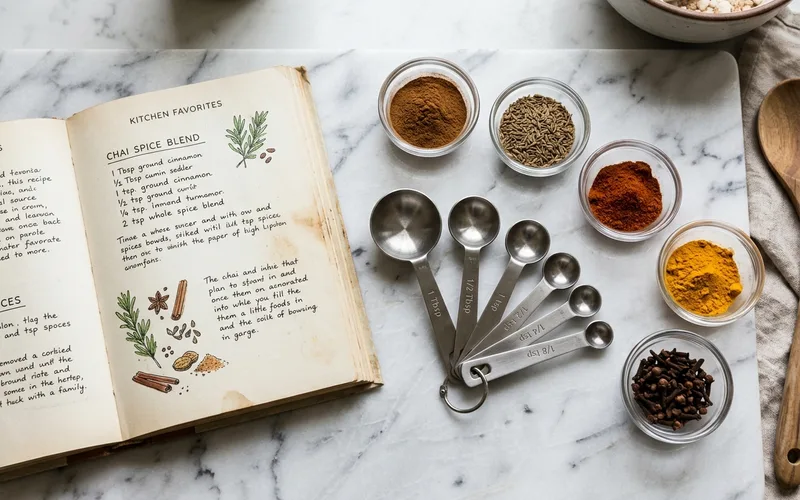
| US measuring tablespoons | 2 tablespoons |
| US measuring teaspoons | 6 teaspoons |
| US customary cups | 1/8 cup |
The spoon and cup fractions are relationships between US customary units. The metric figure is rounded from about 29.57353 mL. Two 15 mL metric tablespoons give 30 mL, which is a practical approximation, while two US customary tablespoons equal one US fluid ounce.
If a spoon or cup comes from a different measurement system, check its printed capacity. The word “tablespoon” on its own does not tell you the number of milliliters it holds in every country.
Why Some Labels Say 30 mL
You may see 1 fl oz (30 mL) on a food label, yet a converter gives 29.57 mL. Those figures serve different purposes.
For US nutrition labeling, the FDA uses 30 mL as the household-measure equivalent of one fluid ounce. A standard US fluid ounce converted with greater precision is about 29.57 mL. The gap is roughly 0.43 mL.
When reading a serving description, use the label’s stated portion. When making a precise unit conversion, use the more precise fluid-ounce factor. The appearance of 30 mL on a label does not mean every calculator showing 29.57 mL has made a mistake.
How One Ounce Compares With Other Pours
If a drink recipe lists several liquid amounts, a small conversion table helps you spot the difference between one ounce and a larger pour. These are volume comparisons, not standard serving sizes.
| US liquid measure | Approximate volume |
|---|---|
| 1/2 fl oz | 14.79 mL |
| 1 fl oz | 29.57 mL |
| 1 1/2 fl oz | 44.36 mL |
| 2 fl oz | 59.15 mL |
| 4 fl oz | 118.29 mL |
For example, a recipe calling for 1 1/2 fl oz requires half again as much liquid as a one-ounce instruction. A glass or jigger may have multiple fill lines; the name of the vessel alone does not identify which line is 1 fl oz. Read a marked capacity instead of assuming the whole glass equals one ounce.
Read “oz” on a Package Carefully
The words around the number tell you what is being measured. “1 fl oz” describes volume, while “net wt 1 oz” describes mass. A gram equivalent, such as “28 g,” points to mass; a milliliter equivalent points to volume.
For instance, a bottle of syrup might state its contents by fluid volume. A packet containing a thick paste could state net weight in ounces, even though the contents can be poured or squeezed. What matters is the printed unit, not whether the product is liquid-like.
If an instruction asks for one ounce by weight and you have only a liquid measuring cup, you need the substance’s density to work out the corresponding volume. A fluid-ounce conversion cannot supply that answer on its own.
There is also a regional detail: one imperial fluid ounce is approximately 28.41 mL. The 29.57 mL figure throughout this guide applies to the US fluid ounce. Check an older or international recipe for its stated system before converting.
A One-Ounce Amount Is a Volume, Not a Glass Size
A vessel’s name does not establish the amount inside it. A small glass may hold more than one ounce, and a larger glass can contain a one-ounce portion at the bottom. The container and its contents are separate measurements.
To picture this, imagine pouring the same measured ounce from a narrow cylinder into a broad dish. The liquid spreads sideways, so its depth decreases. Nothing about that change reduces the amount. Judging by height alone would make the broad dish seem to contain less.
For a container with straight, vertical sides and a constant internal cross-section, equal increases in height correspond to equal increases in volume. A rounded or tapered glass does not have that simple relationship. Half the height may be quite different from half the capacity.
This is why a photograph of “one ounce in a glass” is only an illustration. It cannot give you a transferable fill height for a glass with another shape. A marked volume or a known measuring utensil is the more useful reference.
One Ounce Compared With the Rest of a Drink
Percentages can make a small amount easier to understand. In a drink whose final volume is 10 US fl oz, a one-ounce ingredient accounts for 10% of the total volume. In a final volume of 20 US fl oz, it accounts for 5%.
Notice the phrase “final volume.” Adding one ounce to an existing ten-ounce drink is a different situation from including one ounce within a ten-ounce total. Under a simple additive-volume assumption, the first mixture totals eleven ounces, so the added ounce is about 9.1% of the result.
For a recipe formulated by volume, use the stated total and ingredient amounts. Do not silently replace “one ounce in ten” with “one ounce added to ten.” That change alters the proportion even though the one-ounce measurement itself is unchanged.
These examples describe volume ratios only. They do not calculate nutritional concentration or establish a recommended serving. Those questions need information about what the ingredients contain.
How Long Will a Small Bottle Last?
A bottle’s stated volume can tell you how many measured portions it contains. Divide the total contents by the amount used each time, keeping both values in matching units.
For a hypothetical 4 US fl oz bottle used in one-ounce portions, the arithmetic gives four portions. If each use is half an ounce, it gives eight. The answer changes with the portion size, not with the bottle’s appearance.
In practice, a little liquid may remain on the walls, around a dispenser, or in the final unpoured portion. A calculated portion count assumes the entire stated volume is available. It is useful for planning, but it cannot guarantee that every container will deliver the last portion without loss.
If a product lists 30 mL rather than an exact US fluid-ounce amount, preserve that metric figure in your calculation. A 30 mL container and a 29.57 mL measure are close in size, but the rounding should not be hidden when you divide a small total into precise portions.
Reading Serving Size and Total Contents Separately
A serving description can name one fluid ounce even when the package contains several ounces in total. The serving line and the net-contents line answer different questions: how much a listed portion represents, and how much product the package holds.
For example, an illustrative label could describe a one-fluid-ounce serving inside an eight-fluid-ounce bottle. The bottle does not become a one-ounce bottle because the serving line mentions one ounce. Read the heading attached to each figure before using it in a calculation.
Likewise, a volume stated in a recipe may refer to one ingredient rather than the entire finished drink. If the instructions list one ounce of syrup alongside other ingredients, the final mixture contains more than that syrup amount alone.
Keeping these contexts separate helps when a search result, package photo, or recipe card displays several ounce figures close together.
A Useful Question When the Amount Is Unclear
Ask, “One ounce of what, measured how?” If the answer is “one US fluid ounce poured into a drink,” the volume is already defined. If it is “one ounce weighed on a scale,” the liquid’s density becomes relevant. If it is simply “one small glass,” you still need a measured capacity.
That question often resolves the uncertainty faster than searching for another conversion number. The arithmetic should follow the meaning of the original instruction.
Frequently Asked Questions
Is one liquid ounce the same as one shot?
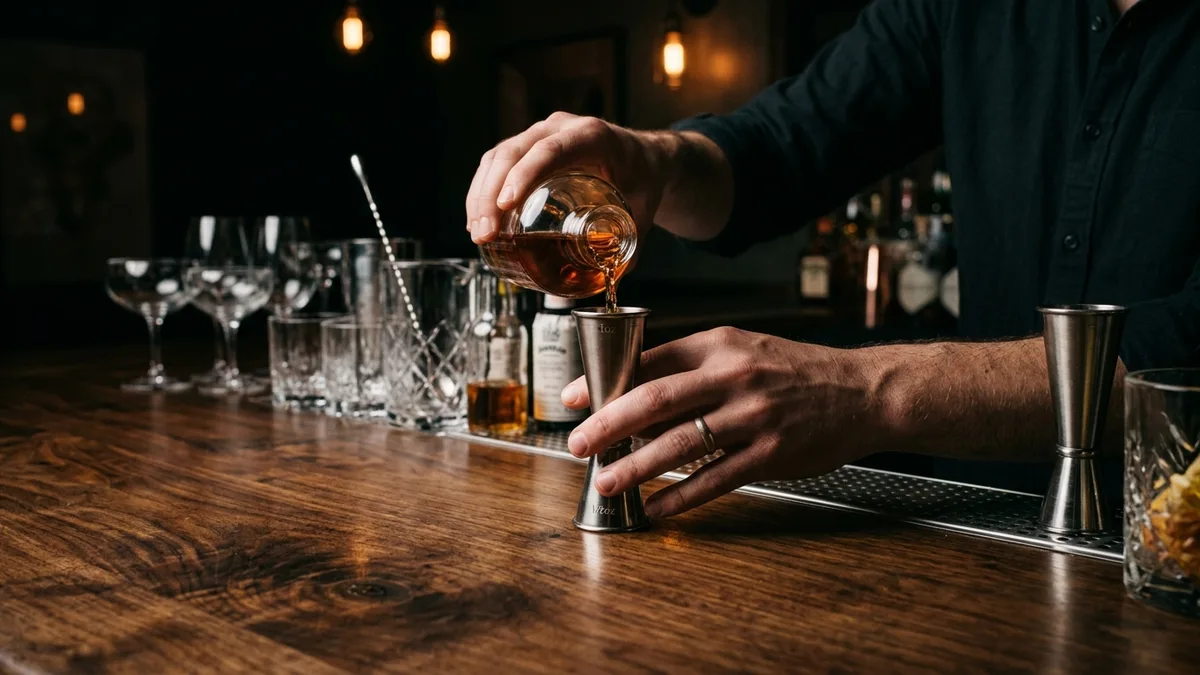
You cannot tell from the word “shot” alone. Glasses and recipes may use different capacities, and a vessel may be larger than the amount it is meant to hold for a particular pour. If you need 1 US fl oz, look for a marked 1 oz line or measure approximately 29.57 mL.
Is one ounce of liquid a quarter cup?
No. In US customary volume measures, 1 fl oz is 1/8 cup. A quarter cup contains 2 US fluid ounces, approximately 59.15 mL. If a recipe needs only one ounce, filling a quarter-cup measure would double the intended volume.
How many one-ounce portions are in 100 mL?
Using US fluid ounces, 100 mL divided by 29.57353 mL is approximately 3.38 one-ounce portions. That means you can measure three full 1 fl oz portions from 100 mL and have some liquid left. This is a volume calculation; no density is needed.
How many fluid ounces are in a 500 mL bottle?
Dividing 500 mL by approximately 29.57353 mL per US fluid ounce gives about 16.91 US fl oz. One ounce is therefore a small part of that bottle’s stated volume. Use the milliliter amount on the bottle if you need to divide it into equal portions.
Why does a glass make one ounce look so small?
The liquid level depends on the glass’s width. The same 29.57 mL creates a shallow layer in a broad glass and a deeper layer in a narrow one. Neither appearance tells you the precise volume without a known fill line or another marked measure.
Does one fluid ounce of water weigh one ounce?
Not exactly. One US fluid ounce of water has a volume of about 29.57 mL and a mass close to 29.57 g at a density near 1 g/mL. One standard ounce of mass is about 28.35 g. The quantities are close enough to invite confusion, but their units describe different properties.
Keep the Unit With the Number
For a US liquid measurement, one ounce is roughly 30 mL, two US tablespoons, or one-eighth of a US cup. Use 29.57 mL when the conversion needs more precision. Check for “fl oz” on labels and recipes so you know the number describes volume before choosing a measuring tool.
Oz to mL Editorial Team
Verified EditorialWritten and verified by our culinary and scientific measurement specialists. All formulas, charts, and conversions strictly reference NIST standard US Customary and Metric SI units.
Convert Fluid Ounces & Milliliters Instantly
Need quick calculations for cooking, hydration tracking, or chemistry? Our free converter updates in real time with high decimal accuracy.
Related Conversion Guides
 Kitchen Measurements
1 oz Liquid: How Much It Is and How to Measure It Easily
Measure 1 oz liquid with confidence. Find its equivalent in mL, tablespoons, teaspoons, and cups, plus practical tips for getting small liquid amounts right.
 Reference Charts
Unit Conversion Chart for Everyday Measurements and Math
Use this unit conversion chart for length, weight, volume, area, speed, and temperature, with metric and US measurements, clear formulas, and worked examples.
 Bottle Conversions
600 ml to oz: Is a 600 mL Bottle the Same as 20 oz?
Convert 600 ml to oz: 20.29 US fluid ounces. Compare it with a 20 oz bottle, check imperial ounces, and find the right cup measurement for your recipe.